C²ORE LAB

Members

Meet the researchers advancing corrosion science, electrochemistry, and critical materials recovery.

Future C²ORE Lab member

Future C²ORE Member

Ph.D. Student

Research topic to be determined.

View Profile
Future C²ORE Lab member

Future C²ORE Member

M.S. Student

Research topic to be determined.

View Profile
Future C²ORE Lab member

Future C²ORE Member

Undergraduate Student

Research topic to be determined.

View Profile
Future C²ORE Lab member

Future C²ORE Member

Undergraduate Student

Research topic to be determined.

View Profile
← Back to Members
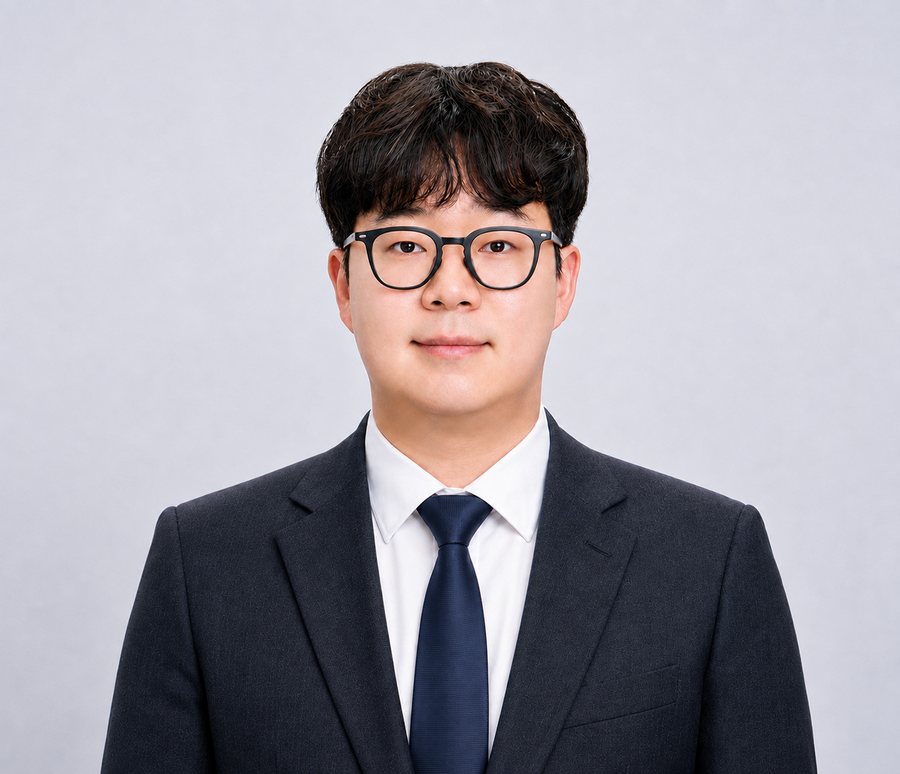
Changkyu Kim
Phone
02-880-7192
Email

Changkyu Kim

Assistant Professor · Seoul National University

Education

  • 2017–2021 · Ph.D., Materials Science and Engineering, Texas A&M University
  • 2016–2017 · M.S., Energy, Texas A&M University
  • 2013–2016 · B.S., Chemical Engineering, Texas A&M University

Career

  • 2026 – Current · Assistant Professor, Department of Materials Science and Engineering, Seoul National University
  • 2025 – 2026 · Postdoctoral Researcher, Idaho National Laboratory
  • 2023 – 2025 · Postdoctoral Researcher, University of Wisconsin–Madison

Research Interests

  1. Corrosion and Electrochemistry of Materials
    • Corrosion, passivity, and localized corrosion
    • Multi-factor materials degradation under corrosive environments
    • Electrochemistry from ambient to extreme environments, including high-temperature aqueous and molten-salt systems
  2. Critical Materials Recovery and Separation
    • Electrochemical extraction and recovery of critical materials
    • Selective separation of rare-earth elements
    • Sustainable recycling and resource recovery
  3. Advanced Electrochemical Characterization
    • Localized electrochemical measurements and microelectrodes
    • Electrochemical probing of microstructure-dependent degradation
    • In-situ and operando electrochemical characterization under extreme environments
← Back to Members
01
Graduate Student

Student Name

Ph.D. Student

Research

Research topic, education, publications, and contact information can be added here.

← Back to Members
02
Graduate Student

Student Name

M.S. Student

Research

Research topic, education, publications, and contact information can be added here.

← Back to Members
03
Undergraduate Student

Student Name

Undergraduate Student

Research

Research interests, project information, education, and contact information can be added here.

← Back to Members
04
Undergraduate Student

Student Name

Undergraduate Student

Research

Research interests, project information, education, and contact information can be added here.

C²ORE LAB

News

Lab updates, announcements, awards, and research highlights.

September 2026

C²ORE Lab Opens at Seoul National University

C²ORE Lab has officially opened in the Department of Materials Science and Engineering at Seoul National University. Our research spans corrosion science, electrochemistry, critical materials recovery, and advanced electrochemical characterization.

More updates coming soon.

C²ORE LAB

Research

Corrosion science, electrochemistry, critical materials recovery, and advanced electrochemical characterization.

RESEARCH OVERVIEW

From Fundamental Mechanisms to Sustainable Solutions

C²ORE Lab investigates corrosion and electrochemical processes across conventional and extreme environments, develops advanced methods to resolve their underlying mechanisms, and creates sustainable electrochemical pathways for critical materials recovery.

RESEARCH 01

Corrosion, Passivity, and Multi-Factor Degradation

We investigate how metals and alloys corrode, passivate, and degrade across diverse engineering environments. Our work spans chloride-containing, acidic, alkaline, and other aqueous chemistries, with particular emphasis on localized corrosion and the stability and breakdown of protective surface films.

Real materials rarely experience a single stressor. We therefore study multi-factor degradation produced by coupled chemical, electrochemical, thermal, hydrodynamic, mechanical, and irradiation effects, connecting fundamental mechanisms to materials reliability and protection.

Research Areas

  • Aqueous corrosion and passivity
  • Localized corrosion and film breakdown
  • Environmentally assisted degradation
  • Coupled and multi-factor degradation
RESEARCH 02

Corrosion and Electrochemistry in Extreme Environments

We study corrosion, interfacial electrochemistry, and materials degradation under conditions that extend beyond conventional laboratory environments. These include high-temperature and high-pressure aqueous systems, molten salts, and other chemically and thermally aggressive media.

By combining thermodynamics, reaction kinetics, mass transport, and materials characterization, we seek to understand oxide and surface-film stability, redox processes, and degradation pathways under extreme conditions—and to develop strategies for monitoring and controlling them.

Research Areas

  • High-temperature and high-pressure water
  • Molten-salt corrosion and electrochemistry
  • Interfacial reactions and redox kinetics
  • Oxide-film stability and materials degradation
RESEARCH 03

Critical Materials Extraction, Separation, and Recovery

We develop electrochemical routes for extracting, separating, and recovering rare-earth elements and other critical materials from diverse resources. Our work begins with primary feedstocks such as ores and concentrates and extends to secondary resources including end-of-life permanent magnets, industrial residues, and recyclable materials.

Our goal is to connect electrochemical leaching, selective redox control, deposition, and separation into efficient and adaptable recovery processes that support circular use of strategically important materials.

Research Areas

  • Ores, concentrates, and primary resources
  • End-of-life magnets and secondary resources
  • Electrochemical leaching and extraction
  • Selective separation and recovery
RESEARCH 04

Advanced and Localized Electrochemical Characterization

We develop and apply electrochemical tools that reveal both global response and highly localized reaction behavior. Conventional polarization, voltammetry, and impedance measurements are integrated with microelectrodes, spatially resolved probes, and in-situ/operando characterization.

These techniques are adapted across room-temperature aqueous systems, high-temperature and high-pressure environments, and molten salts, enabling us to resolve heterogeneous reactions over multiple length and time scales.

Research Areas

  • Conventional electrochemical methods
  • Microelectrodes and localized measurements
  • In-situ and operando characterization
  • Measurements from ambient to extreme conditions
C²ORE LAB

Publications

Selected journal articles and scholarly outputs from C²ORE Lab.

2026

  • C. Kim, Q. Yang, and D. Molina*, “Molten salt electrodeposition with galvanic replacement (MSEGR) for intra-rare earth selective enrichment in molten chloride salts”, Sep. Purif. Technol. (2026).
  • C. Kim and D. Molina*, “Separation of residual salt using vacuum sublimation for molten salt applications”, Sep. Purif. Technol. (2026).
  • C. Kim, J. Sure, and A. Couet*, “The use of microelectrodes in molten salt electrochemistry”, Anal. Chem. (2026).

2025 & Earlier

  • C. Kim and A. Couet*, “In-situ monitoring of molten chloride salt chemistry and corrosion using a microelectrode”, J. Am. Chem. Soc. (2025).
  • J. Liu, H. Liu, B. Ghule, C. Kim, G. Lucadamo, W. Howland, S. Lozano-Perez, C. Grovenor, and A. Couet*, “Effects of substrate orientations on the oxide textures, nano-porosity and oxidation kinetics of zirconium: A single crystal study”, Zirconium in the Nuclear Industry: 21st International Symposium, ASTM International (2025).
  • V. Ponce, S. Cho, C. Kim, S. Ahn, and H. Castaneda*, “Corrosion prediction based on damage evolution framework by using artificial neural networks for multilayer coating/substrate interface”, J. Solid State Electrochem. (2025).
  • J. Son, J. Oh, C. Kim, D. Cho, S. Cho, H. Castaneda, M. Akbulut*, and W. Teizer*, “Dual-functional superhydrophobic coating on biodegradable Mg alloys by nano-SiO₂ assisted surface modification”, Surf. Coat. Technol. (2024).
  • C. Kim, W. Yang, and H. Castaneda*, “Delaying hydrogen uptake by Mg and Sr added Al-Si coating during hot-press-forming of boron steels”, Mater. Lett. (2024).
  • S. Cho, C. Kim, and H. Castaneda*, “Impedance response influenced by variability in the random distribution of physical properties of coated materials in two-dimensional space”, J. Electrochem. Soc. (2023).
  • Y. Lu, D. Narayanan, C. Kim, D. D. Macdonald, and H. Castaneda*, “Determination of chloride threshold of Cr-based steel rebars in a synthetic concrete pore solution based on electrochemical methods”, Corrosion (2023).
  • M. Lee, S. Han, C. Kim, S. Velumani, A. Han, A. H. Kassiba, and H. Castaneda*, “High corrosion resistance, biocompatibility, and antimicrobial activity of tri-metal oxides nanocomposite coated stainless steel”, ACS Appl. Mater. Interfaces (2022).
  • L. Chen, C. Kim, N. Michailidis, and H. Castaneda*, “Corrosion assessment for aging treatment of rolled and selective laser melting 18Ni 300 maraging steel”, Corrosion (2022).
  • C. Kim, S. Cho, W. Yang, A. I. Karayan, and H. Castaneda*, “Corrosion behavior of Al-Si-Mg coated hot-press-forming steel”, Corr. Sci. (2021).
  • C. Kim, R. Goldsberry, A. I. Karayan, J. Milla, L. Goehring, M. M. Hassan, and H. Castaneda*, “Electrochemical evaluation of epoxy-coated-rebar containing pH-responsive nanocapsules in simulated carbonated concrete pore solution”, Prog. Org. Coat. (2021).
  • C. Kim, L. Chen, H. Wang, and H. Castaneda*, “Global and local parameters characterizing and modeling external corrosion for steel underground pipelines: Critical factors”, J. Pipeline Sci. Eng. (2021).
  • W. Yang*, J. Lee, C. Kim, S. Ahn, and H. Castaneda, “Effects of adding Mg to AlSi coating for hot-stamping steel”, Corros. Sci. Technol. (2021).
  • C. Kim, A. I. Karayan, J. Milla, M. M. Hassan, and H. Castaneda*, “Smart coating embedded with pH-responsive nanocapsules containing a corrosion inhibiting agent”, ACS Appl. Mater. Interfaces (2020).
  • C. Kim, D. E. Choe*, and H. Castaneda, “Probabilistic corrosion initiation model for coastal concrete structures: Computational framework”, Corros. Mater. Degrad. (2020).
  • G. S. Ogumerem, C. Kim, I. Kesisoglou, N. A. Diangelakis, and E. N. Pistikopoulos*, “A multi-objective optimization for the design and operation of a hydrogen network for transportation fuel”, Chem. Eng. Res. Des. (2017).
  • H. Nam, C. Kim, and S. Capareda*, “Catalytic upgrading of fractionated microalgae bio-oil (Nannochloropsis oculata) using a noble metal (Pd/C) catalyst”, Algal Res. (2017).

Equal contribution    * Corresponding author

C²ORE LAB

Contact

Get in touch with C²ORE Lab at Seoul National University.

Contact Information

For research collaborations, academic inquiries, or general questions about C²ORE Lab, please contact us using the information below.

ProfessorChangkyu Kim
Email
Phone02-880-7192
OfficeBuilding 33, Room 208
Seoul National University
CORROSION & CRITICAL MATERIALS RECOVERY LAB

Understanding Corrosion.
Enabling Recovery.

C²ORE Lab advances fundamental understanding of corrosion and develops electrochemical technologies for critical materials recovery and sustainability.

Learn More
CORROSION FOR TODAY’S INDUSTRIES

Protecting Materials.
Extending Service Life.

We investigate corrosion, passivity, localized attack, and materials degradation to improve reliability across practical engineering environments.

Learn More
CORROSION IN EXTREME ENVIRONMENTS

Corrosion at the Extremes.
Materials Built to Endure.

We investigate corrosion and electrochemical degradation from high-temperature aqueous systems to molten salts, enabling materials performance in emerging fields.

Learn More
CRITICAL MATERIALS RECOVERY

Recovering Critical Materials.
Enabling Sustainable Supply.

We develop electrochemical extraction and selective separation approaches for rare-earth and other critical materials toward sustainable resource recovery.

Learn More
ADVANCED ELECTROCHEMISTRY

Probing Electrochemistry.
From Global to Local.

From conventional electrochemical measurements to localized microelectrodes and in-situ/operando methods, we reveal how microstructure and environment govern electrochemical processes.

Learn More
Learn More
RESEARCH OVERVIEW

From Mechanisms to Solutions

Fundamental Studies

Electrochemical reactions and interfacial mechanisms

Corrosion & Degradation

Material degradation across aqueous, high-temperature, high-pressure, and molten-salt environments

Resource Recovery

Selective electrochemical recovery of rare-earth elements and critical materials

Advanced Techniques

In-situ/operando and multi-scale electrochemical characterization